 Blog
Blog
Where Can I Buy Quick Fix Synthetic Urine?
ONE OF THE MOST COMMON QUESTIONS WE RECEIVE HERE AT QUICK FIX: WHERE CAN I BUY A QUICK FIX SYNTHETIC IN A STORE NEAR ME?…

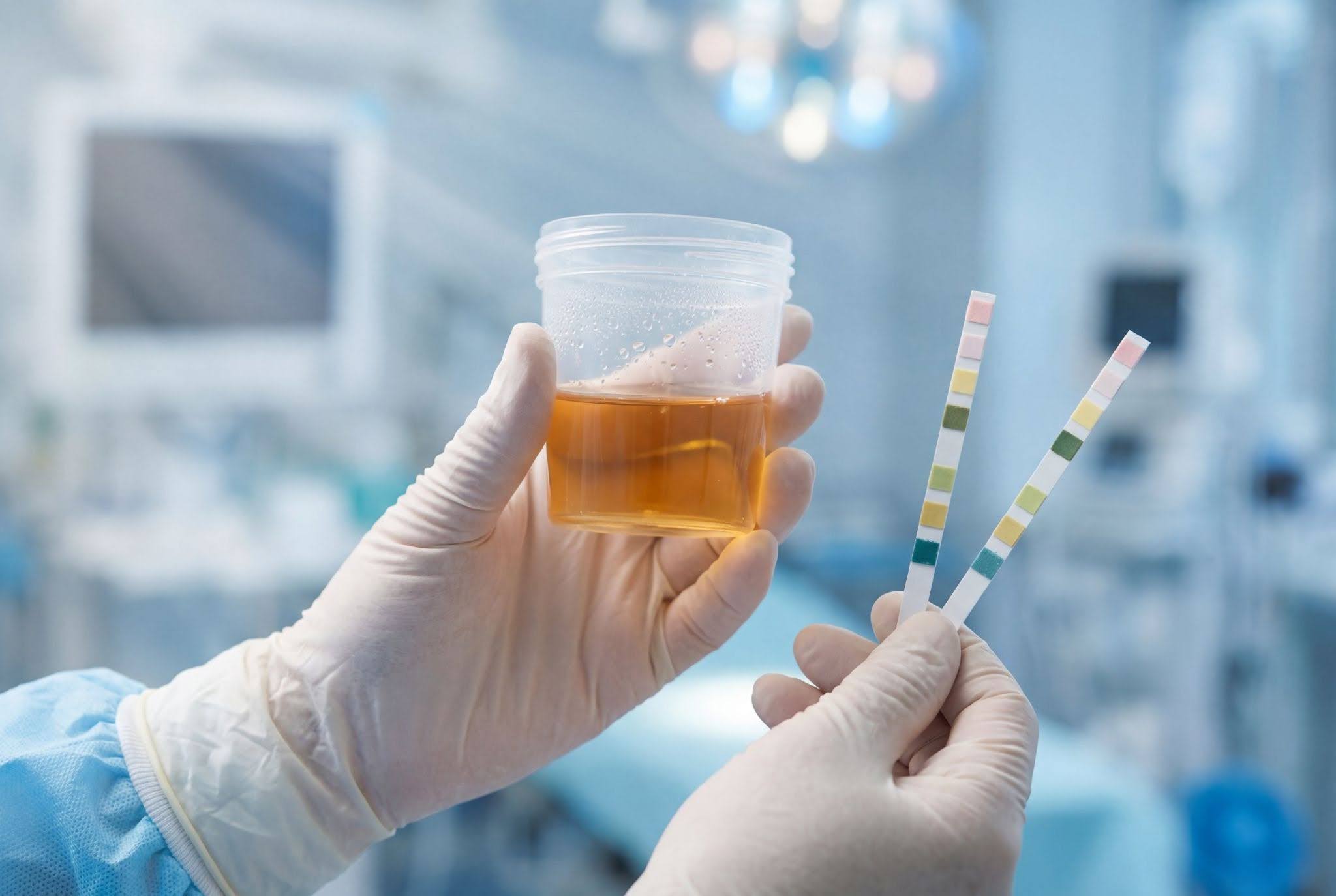
TL;DR: LabCorp does not run a single, dedicated synthetic urine detector test. What they do run is a battery of specimen validity checks that evaluate whether your urine behaves like actual human urine. If the markers don’t add up, the sample gets flagged. Whether that flag says substituted, adulterated, or invalid depends entirely on what went wrong.
If you have found yourself nervously Googling “does LabCorp test for synthetic urine” at 2 AM mid-week, you are certainly not alone. LabCorp is one of the largest clinical laboratory networks in the United States, processing millions of workplace drug tests every year. Plenty of people get anxious about the test’s implications.
In fact, for many people, the stakes of a LabCorp test, whether we are talking about a new job, a probation requirement, or a DOT-mandated screen, are about as high as they can possibly get. After all, livelihoods are on the line.
The problem is that the internet is drowning in contradictory, unhelpful information. Forum threads are either uttering cavalier, inaccurate information or unreasonably paranoid nonsense, such as “They test for everything, including your grandmother’s maiden name.”
This narrative is something we have noticed of late, so we figured it was worth addressing the topic clearly and scientifically. Be aware, however, that this isn’t a fun, engaging article – this is a serious, considered examination of a subject that deserves more than idle online conjecture.
To address the question of whether LabCorp can detect synthetic urine or not, we first need to explain what happens to your sample once it leaves your hands at the facility.
The drug testing side of things is relatively straightforward. LabCorp uses immunoassay panels, which are essentially just antibody-based tests that react to the presence of specific drug metabolites. Depending on what your employer or testing authority has ordered, this could be a standard 5-panel (covering THC, cocaine, opiates, amphetamines, and PCP), a 10-panel, or something broader.
Either way, these panels are looking for drugs. That’s it. Contrary to common belief, they are not designed to determine whether the urine itself is real or fabricated. A 5-panel and a 12-panel are equally uninterested in the sample’s authenticity. That job belongs to an entirely separate urine lab screening process.
Specimen Validity Testing runs alongside the drug screen on every workplace sample LabCorp processes. It’s not optional, it’s not random, and it doesn’t care whether you’re being tested for pre-employment, random screening, or a DOT return-to-duty.
SVT evaluates a series of physiological markers that real human urine consistently produces within predictable ranges. You might think of it as the lab’s way of asking: Does this liquid, chemically speaking, actually look like it came from a human body?
The core markers include creatinine concentration (normally at least 20 mg/dL), specific gravity (typically 1.0020–1.0200), pH (normal range roughly 4.5–9.0), and the presence or absence of oxidizing adulterants. Anything significantly outside these windows gets noticed, and quickly.
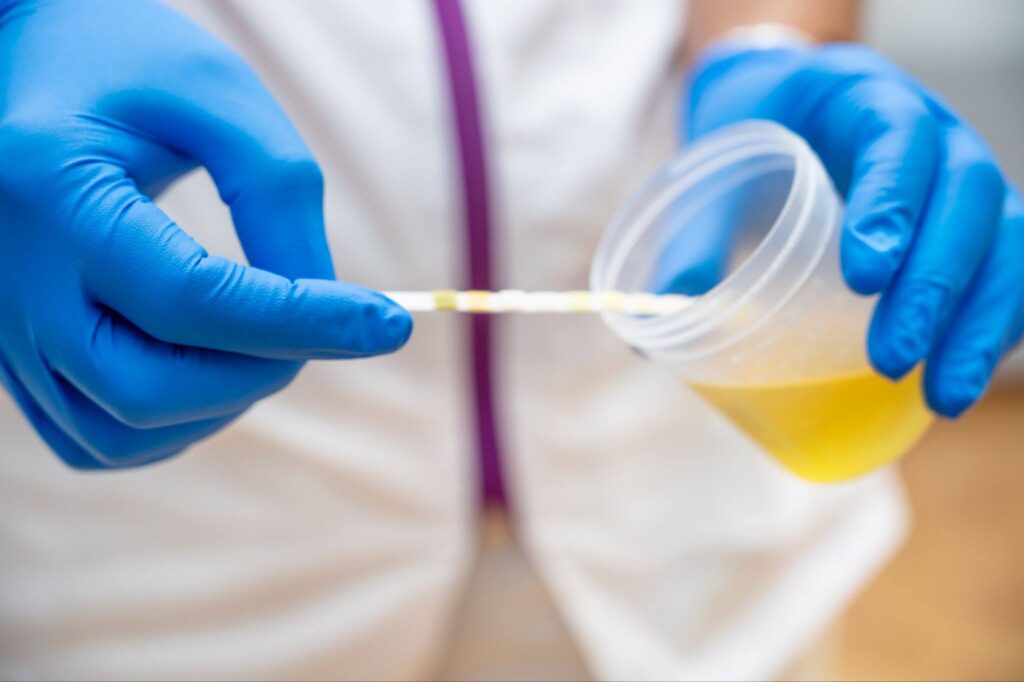
Right, let’s answer the actual question.
In short, no. LabCorp does not run a test specifically labeled synthetic urine detection. There is no single assay that lights up red when fake pee hits the analyzer. That’s not how it works, and anyone who tells you otherwise is either misinformed or trying to sell you something (or both).
What LabCorp does do is evaluate whether a sample’s chemical fingerprint falls within the ranges expected of genuine human urine. Specifically, SVT can flag a sample when:
If any of these markers look off, the sample gets flagged. It’s as simple as that – the lab doesn’t need to know it’s synthetic to know something isn’t right.
Now, a well-formulated synthetic urine product that contains creatinine, urea, uric acid, and balanced pH at the correct specific gravity can, in theory, present markers within the expected physiological ranges. Remember, though, that passing validity testing doesn’t mean the lab has certified the sample as human; it simply means nothing was flagged.
We trust you can see the clear distinction there.
Let’s break down the specific markers and checkpoints, because understanding them for what they are is far more useful than any amount of wild forum speculation.
Before the sample even reaches the lab, the first thing that happens at the collection site is a temperature check. Federal guidelines (49 CFR Part 40) require the collector to verify the specimen temperature within four minutes of collection. It must fall between 90°F and 100°F.
This is the single most common reason samples get rejected on the spot – not some sophisticated chemical analysis as many expect – but a simple, basic thermometer reading.
If the temperature falls outside this range, the collector must note it on the Chain of Custody Form and immediately order a new collection under direct observation. Both specimens are shipped to the lab. It’s a remarkably simple checkpoint, and yet it catches a staggering number of people.
Normal urine pH falls between 4.5 and 9.0. A reading below 3.0 or at 11.0 or above triggers an adulterated classification. Values in the grey zone (3.0–4.5 or 9.0–11.0) may yield an invalid result, prompting further review.
Beyond pH, LabCorp screens for oxidizing agents such as bleach, pyridinium chlorochromate, or glutaraldehyde, all of which are compounds that some people add to real urine in an amateurish attempt to destroy drug metabolites.
Nitrite concentrations at or above 500 mcg/mL flag as adulterated. These screens are specifically designed to catch people who’ve tampered with a genuine sample rather than substituted it entirely.
As the backbone of LabCorp’s synthetic urine detection capability (even if the lab doesn’t call it that), these two markers work in unison.
Creatinine below 2 mg/dL with a specific gravity at or below 1.0010 (or at or above 1.0200) results in a “substituted” classification, which, under federal workplace testing rules, is treated identically to a positive drug test. Creatinine between 2 and 20 mg/dL with specific gravity between 1.0010 and 1.0030 gets flagged as dilute.
Now, a dilute negative may prompt a recollection; a substituted result is far more serious. Water, for instance, has a specific gravity of 1.0000 and zero creatinine – it would be flagged instantly.
This is a misconception we see constantly across various forms of media, so it’s worth being clear about: the size of your drug panel has absolutely nothing to do with whether your sample undergoes validity testing.
A 5-panel test screens for five drug classes. A 10-panel screen for ten. But SVT (the part that checks whether the sample is legitimate) runs independently, regardless of what drugs are being tested for.
Whether your employer ordered the most basic screen or a comprehensive expanded panel, the creatinine, specific gravity, pH, and adulterant checks are exactly the same.
Drug panels detect drugs, while validity testing checks the sample itself. They are two separate processes running on the same specimen, and conflating them is one of the most common errors we see online.
The consequences of a urine test not going your way are far more concerning than the science, so let’s take a quick look at what actually happens when SVT catches something.
LabCorp classifies problematic samples into three categories, and each carries different implications:
When a sample is flagged as substituted or adulterated, the Medical Review Officer (MRO) contacts the donor for a verification interview. This is your opportunity to present a legitimate medical explanation. For example, certain rare conditions can produce abnormal creatinine or specific gravity readings.
If no credible medical explanation is provided, the MRO reports a verified refusal to test. For DOT-regulated employees, this triggers immediate removal from safety-sensitive duties and a mandatory SAP referral. Employees can request a split specimen retest at a second SAMHSA-certified lab within 72 hours.
For invalid results, the process is far more forgiving; the test is cancelled, a new collection is ordered (usually under direct observation), and the employee gets another chance.
LabCorp doesn’t use a fake urine detector. They use Specimen Validity Testing, which checks creatinine, specific gravity, pH, and adulterants on every single workplace sample. If something falls outside expected ranges, the sample is flagged, and the consequences are identical to those for a positive result.
Products like Quick Fix exist, in part, because of how SVT works. The formula is built to hit the same markers labs actually check, such as creatinine, urea, uric acid, pH, and specific gravity, which is why it’s become the ideal synthetic urine product for calibration, research, and, frankly, whatever ill-advised reason people may have for using it.
Disclaimer: This article is for informational and educational purposes only. It does not endorse tampering with, cheating on, or otherwise attempting to fraudulently pass drug tests. Always comply with applicable laws, employer policies, and testing regulations.
Not directly. LabCorp uses SVT to evaluate physiological markers. If those markers fall within expected human ranges, the sample passes validity checks. There is no standalone fake urine per se.
LabCorp can flag a sample as substituted if its chemical profile doesn’t match genuine human urine. Whether it detects a specific synthetic product depends entirely on how well that product replicates human markers.
Standard SVT does not specifically test for synthetic formulations. However, newer platforms like LabCorp’s ToxAssure Flex include proprietary biomarker panels that go beyond traditional chemistry, and the industry is trending toward more sophisticated detection methods.
No, and this is a common misconception. Drug panels detect drug metabolites, not the authenticity of the sample. Validity testing is a separate process that runs alongside any panel.
A product formulated with the correct creatinine, specific gravity, pH, urea, and uric acid levels can present markers within expected ranges. Passing means nothing was flagged; it does not mean the lab has verified the sample as human.
It really depends on the classification. Substituted or adulterated results are treated as a refusal to test (equivalent to positive). Invalid results typically lead to cancellation and recollection under direct observation.
 Blog
Blog
ONE OF THE MOST COMMON QUESTIONS WE RECEIVE HERE AT QUICK FIX: WHERE CAN I BUY A QUICK FIX SYNTHETIC IN A STORE NEAR ME?…
 Blog
Blog
How to use your Quick Fix urine Upon reading synthetic urine reviews and stories of how people went into the lab and delivered a synthetic…
 Blog
Blog
Gas chromatography-mass spectrometry is a means of analyzing samples to identify individual substances using the features of gas-liquid chromatography as well as mass spectrometry.…


