 Blog
Blog Where Can I Buy Quick Fix Synthetic Urine?
ONE OF THE MOST COMMON QUESTIONS WE RECEIVE HERE AT QUICK FIX: WHERE CAN I BUY A QUICK FIX SYNTHETIC IN A STORE NEAR ME?…


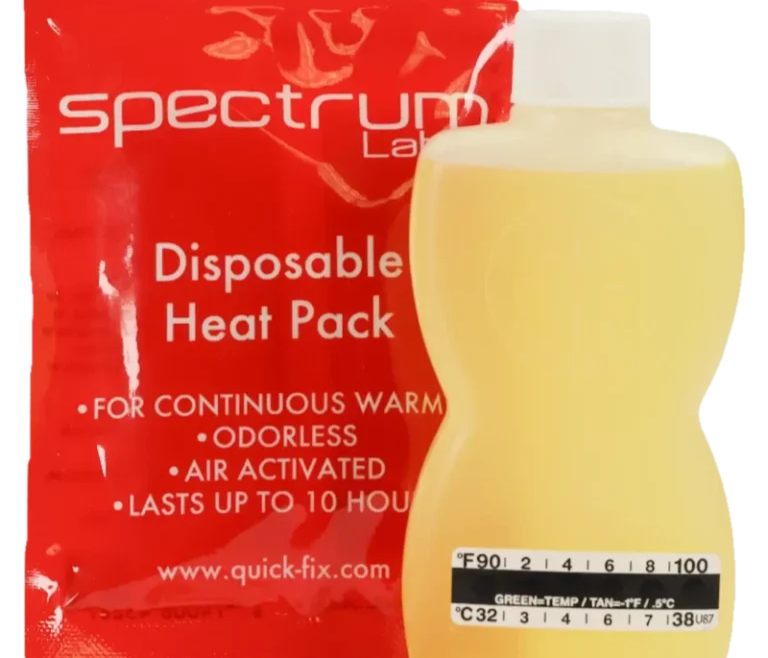
TL;DR: A significantly overheated Quick Fix sample typically takes 10–20 minutes to cool back into the valid 94–99°F range in standard room-temperature conditions. Remove the heating pad, set the bottle on a flat, dry, room-temperature surface, and recheck the strip every five minutes. Do not apply cold water, ice, or refrigeration. Overheating does not damage the formula.
If you have overheated a Quick Fix sample, don’t worry. It is not a disaster, and it certainly hasn’t ruined the formula. You also wouldn’t be the first person to do so. We want to be clear about that from the outset because the moment the strip reads too warm, many people panic, assuming the product is useless. Far from it. You just need to wait for it to resume its normal temperature.
But how long does Quick Fix take to cool down, exactly? Usually, around 10 to 20 minutes at ordinary room temperature will do it. There are a few other things to take into account, though, and this short blog post gets to grips with that, covering the cooling process, variables that push the time up or down, and how to avoid an overheated bottle in the first place.
Ten to twenty minutes is a solid average, but the actual number depends on a few things. If you are using this product while on a camping trip in the Mojave Desert (highly unlikely, granted), you might have to wait longer than your counterpart in Chicago.
More realistically, some of the more common variables include:
A bottle at 105°F has a short walk back into range, while a bottle at 115°F has a longer one. Cooling also slows down as the temperature approaches the ambient, which is why those final couple of degrees always feel like they take an unreasonably long time.
Cooling is fundamentally about a liquid giving up heat to the surrounding air, and the larger the temperature difference between them, the faster it happens. A room in the mid-80s°F will drag the process out. A room in the mid-60s°F will move it along nicely. The 10–20 minute estimate assumes a standard indoor temperature of around 68–72°F.
With the pad still attached, the bottle isn’t cooling; it is being kept warm by a device specifically designed to do exactly that. Take it off, and put it aside. Cooling only begins once the heat source is gone.
A regular countertop is exactly what you want. Cold surfaces (metal cutting boards, marble slabs fresh from a cold room) pull heat away too quickly, which produces uneven cooling and the sort of strip reading you cannot trust.
It’s not exactly complicated, but there is a process involved. So, here is the correct sequence for how to cool down fake pee that has been pushed past the valid range:
Overheating almost always comes down to a moment of microwave impatience. A handful of small habits will keep the cooling problem from ever appearing:
Overheating is the most forgiving mistake you can make with a Quick Fix kit. The formula is unaffected, and twenty minutes on a room-temperature countertop puts everything back where it needs to be. There really is no need to worry – it’s nothing more than a waiting game.
The instinct to speed things up is where the real problems start. Ice, fridges, cold water, and even blowing on the bottle might each introduce something worse than the original issue, and none of them work faster than simply waiting. Either way, the strip tells you when the sample is ready, and it’s only ten minutes or so.
Not in any way you would want, no. Human hands are around 98.6°F, so if the sample is above that temperature, cupping it in your palms actively slows its cooling. Body heat becomes useful once the sample is inside the valid range and you want to keep it there. It is not useful for cooling something down.
Yes. Below-freezing air will strip heat from an unprotected bottle within minutes, and once the sample dips below 90°F, you have swapped one problem for another. In genuinely cold conditions, carry the bottle against the body during transport rather than letting the outside air do the work.
It’s really best not to. The temperature strip is designed for natural cooling rates, not forced ones, and rapid temperature drops can affect its adhesion. Condensation forms on the outside of the bottle. And in most cases, you will end up overshooting the target range and then needing to warm the sample back up again.
Disclaimer: This content is for informational and educational purposes only. Quick Fix Synthetic does not condone or encourage the use of our products to defraud legally mandated drug tests. Please consult your local and state laws before use.
References
Quick Fix Synthetic – How to Heat Quick Fix Synthetic Urine: https://www.quickfixsynthetic.com/how-to-heat-quick-fix-synthetic-urine-6-4-step-by-step-guide/
SAMHSA Mandatory Guidelines for Federal Workplace Drug Testing Programs: https://www.samhsa.gov/workplace/resources/drug-testing
 Blog
Blog ONE OF THE MOST COMMON QUESTIONS WE RECEIVE HERE AT QUICK FIX: WHERE CAN I BUY A QUICK FIX SYNTHETIC IN A STORE NEAR ME?…
 Blog
Blog How to use your Quick Fix urine Upon reading synthetic urine reviews and stories of how people went into the lab and delivered a synthetic…
 Blog
Blog Gas chromatography-mass spectrometry is a means of analyzing samples to identify individual substances using the features of gas-liquid chromatography as well as mass spectrometry.…


